As we age, hair loses some of its thickness and volume. But you don't need to succumb to the tyranny of this cold, hard fact of follicular life. There are many hacks, haircuts, products, tips, and tricks that can help you boost the fullness and thickness of your hair. Your hair will look naturally voluminous and lively if you follow any of these expert suggestions that best fit your hair type, style, or situation.
Regular haircuts
The golden rule of healthy hair is regular trims, which boosts fullness. However, Sarah Rappolt, stylist and Director of Education at Michael Angelo's Wonderland Beauty Parlor, stresses that while a good cut is essential, the maintenance of said cut is even more important. "People tend to stretch time between haircuts because of their busy schedules and lifestyles," Rappolt told me. "When layers grow out and ends get split and limp, we sacrifice body and fullness."
Mio Sota of Trio Salon in Chicago declares that "a great, even haircut" is crucial and the cornerstone of full hair. If a cut is bunk and you don't tend to it, "you'll be spending more time trying to style it to look decent, rather than spending the time to add volume," Sota explained.
Therefore, a trim every six to eight weeks is recommended by Rappolt to "keep your hair looking fresh, bouncy, and full."
Mid-length cut with a blunt bottom
Los Angeles-based celebrity hairstylist Laurie Heaps has a go-to cut for adding volume. It's mid-length, with a critically important twist. "When this style is cut with a blunt bottom, hair is going to appear thicker and fuller," Heaps told me. "The weight from long hair is removed, but the cut is still long enough, especially if you are not ready for a super short cut." With this style, you can have the best of both worlds — length and thickness.
A bob or lob
Length is often equated with fullness, but shorter cuts like bobs and lobs (long bobs) allow for a fullness, according to Rappolt. "These lengths are great for volume and body because they sit nicely around the collarbone and shoulder area," she explained. There's an added bonus, too!
Rappolt shared, "As the haircut grows, the shoulder naturally pushes the hair up for more fullness and volume." How's that for a natural way to add some thickness? Plus, you avoid that awkward and annoying growing out phase!
Short hair, don't care
While super short hair may seem counterintuitive to fullness and volume, Alex Kantor, a hairstylist and barber for 14 years with fine hair of her own, dispels the notion. "Keep it short," she declared. "The idea that your hair will appear fuller if it's longer is a total myth."
Coby Alcantar of Oribe agreed, saying, "Removing hair may seem contradictory for finer hair, but carefully (read: barely) done, it can help the hair move, which can appear fuller." To achieve this look, ask your stylist to remove internal weight to increase fullness. "Creating an 'inner layer' or a support system for the length that is left to rest on can help add volume and depth," Alcantar explained.
Layers
Layers are an easy way to get fullness, if you follow these golden rules. Celebrity hairstylist Angelo David Pisacreta is an expert in thinning hair who suggests asking your stylist for "a cut with few layers to add volume, as it will appear a little thicker." He also has some bad news for long-haired girls, saying, "As much as you love long hair, if it's thin, long is not the best cut or style for you." Instead, interspersing layers throughout should do the trick to increase the look of lush, thick locks.
Rappolt agreed, saying, "To get more body and fullness with long locks, it's important to have layers." Kantor explained that fine hair cut in all one length "will fall flat and lose life," but cautions that when "adding layers, don't go crazy short or choppy because fine hair can't hold that shape."
Crimpers
Crimped hair was huge in the '80s, as the heat styling tool imprinted a zig zag pattern into hair. Many stylists suggest crimping hair at the roots to create the illusion of fullness, but in a twist — you actually hide your handiwork. It's about the root lift provided by the crimper, not the pattern.
Christy Stewart, stylist and owner of CRS Hair Design, uses a texture iron, telling me, "It's basically like an old-school crimping iron." She suggests sectioning off your hair at the part, clipping it out of the way, and then crimping the hair that's underneath at the root. Release the hair that's been clipped and cover up the hair you crimped. "This technique adds texture and helps give tons of volume," she said.
Sheenon Olson, celebrity stylist at ATMA Beauty in Miami, also advocates crimping for fullness. He encourages using a micro crimping iron, telling me, "You can use this iron to crimp the first two to three inches of your hair — typically in the crown area — and then hide the crimping with a thin veil of hair."
Who knew the crimping iron could be such a secret weapon?!
Soft waves
If you have fine hair, "you can add lots of body with soft waves," according to Heaps. Loose waves are easily created with a curling iron or by sleeping with your hair fastened in loose, thick braids, which you eventually shake out in the morning and further texturize with a sea salt spray. You can sleep with damp or dry braids, as well. These style tricks require minimal to no commitment, as well as little effort or spend on additional product.
Height at the crown
Heaps also suggests the easiest styling tip to create the look of fullness. "Take a mini round brush to damp hair and use a lifting motion around the root area," she explained. "The heat from your dryer, paired with a thermal spray, will ensure a hold with height that isn't sticky or overly stiff." It's the perfect mix of product, tools, and wrist motion skill and it's incredibly cheap to accomplish. You also enjoy a '60s-inspired, fullness-at-the-crown aesthetic.
Properly applied product
Speaking of products, the way that you apply them to your specific hair type, be it thick, curly, straight, or fine, will also assist in your efforts to make your hair look thicker. Less is definitely more when seeking fullness and it may require that you experiment with different products until you the combo that works best for you, so be patient.
"For example, with mousse, a golf ball-sized amount is ideal for regular hair," Heaps shared. "Girls with fine hair should use slightly less product to ensure it is not weighed down."
Dry shampoo
In recent years, dry shampoo has become one of the most popular styling products on the market. Brands line shelves with different formulations and fragrances meant to keep your hair fresh, clean, and to zap excess oil, which can weigh strands down in between washes.
Karen Gordon, owner of J. Gordon Designs in Chicago, told me, "If you have fine, silky hair that never seems to have enough volume, tip your head upside down and spritz a some dry shampoo all over at the roots. Flip your head back and voila! You'll notice a whole lot more volume."
Keep hair clean
This one's really simple: always keep your hair clean. Not just for general hygiene purposes, but dirty hair is really obvious and goes limp.
"When hair starts to look greasy, it will also start to look thin," Martial Vivot of Martial Vivot Salon Pour Hommes told me. Plus, product residue also adds weight and makes hair flat, which is the opposite of what you are seeking. While some stylists recommend washing hair every other day, if you seek thickness, it's best to wash daily or as regularly as possible.
Dry hair completely
It's also crucial to blow dry your strands all the way through, no matter their length or texture, according to Vivot. "The wetter it looks, the thinner it looks," he explained. Further to this point, he also recommends using styling products with a dry or a matte finish, rather than ones with a wet or glossy sheen for the same reason.
Leah Taylor of Smoke and Mirrors Salon in Baltimore suggests a simple hack before blow drying and before using styling products — gently and partially towel dry hair first. The technique "allows the hair to truly accept their styling product and work with their hair rather than simply weighing it down," she explained. Product works best in slightly damp hair and is not as effective "if left on the outside of the hair shaft, since it will further flatten fine hair."
Blow dry upside down
Bend over at the hips and blow dry your hair upside down for some easy and additional fullness. Jerome Lordet, master stylist at Pierre Michel Salon, told me to try "using only your fingers with the head upside down, pulling on the roots to give more volume. Finish with round brush to smooth or wave your hair."
Lordet also suggests going "against the natural growth pattern of the roots of the hair using hot air followed by cold air to set the style and give fullness."
Embrace wigs, extensions, and clip-ins
There is no shame in embracing additional hair that's not naturally yours in the form of wigs, hair pieces, extensions, and clip-ins. These tools all "play a role in creating fuller hair" and "depending on the which method is appropriate for your situation, they will add volume, body, length, confidence, and a polished look," said Pisacreta.
Stewart asserts that extensions aren't just a tool to increase length. "I am a Natural Beaded Rows (NBR) certified stylist," she explained. "NBR is the most natural and the least damaging extension method out there. There's no tape or sticky glue and minimal points of contact on the hair. It's ideal for people who have fine, limp hair that want more volume."
Extensions are also ace since they cut down on styling time. Win-win!
Go with a side part
"A deep side part can make hair appear fuller and adds drama and edge to your look," explained Leo Izquierdo, co-founder of IGK Hair Care. Flip through the pages of any fashion mag and you will see Taylor Swift, Rihanna, and Selena Gomez rocking deep side parts. It's an easy way to change up your look without having to go under the scissors and properly done side part doesn't look obvious.
Parts are really critical when it comes to helping hair appear full. But having your part extend to the back of your head is a no no! "This makes your hair look really flat," says Rappolt. "Only part what would be the bang section or the first two inches back from your hairline."
Texturize your roots
Finish your style with some dry texturizing spray spritz on roots, according to Sota. "Let the product sit for a minute," she said. "Then take your fingers and really work them into the roots. This will give tons of grit to the hair and help make the hair stand at the roots."
Molly Weinreb, a stylist at Blackstones Salon, recommends using a texture spray beyond the roots so all of your hair is fuller. "Experiment and spritz some through your hair and shake it out using your hands to distribute the product through your hair," she raved. "This is great for all over volume."
Pay attention to ingredients
It's also important to know what you are putting in your hair because there can be lots of stuff in the product recipe that leads to limp locks. "Pay attention to Ingredients from shampoo to styling goop," warned Kantor. "Stay away from harsh, synthetic stuff like sulfates and parabens."
She explained that stuff weighs follicles down, which is the reverse of the fullness you are trying to achieve. Therefore, you should take some time to educate yourself about the ingredients in styling products because knowledge is styling power!
From:Thelist
Tuesday, January 30, 2018
Monday, January 29, 2018
Why you'd never guess Ellen is 60
Ellen DeGeneres is the best. End of story. Her infectious smile has won her the hearts of viewers of her show (as well as some awards), and her youthful spirit makes it hard to believe that she just turned 60. Ellen proves that laughter is the best medicine, even against aging, and she takes every opportunity to do it.
do i
t.
Like when she showed up to the Emmys in the infamous Bjork dress
When she carried an Oscar like a baby in a pouch
Or tried to get an upside-down kiss of her own from Kirsten Dunst
She enjoys life in between a big cat and a cat suit
Or as a high-fashion runway model for Richie Rich
While Ellen usually sweeps at awards shows, she take the phrase literally.
She's a great cook. Have you tried Ellen's signature dish of a hot dog dipped in Snapple?
And she keeps in shape with routine stretches and tennis.
No wonder she snagged Portia de Rossi!
Best of all, Ellen brings pizza to the party. Even the Academy Awards. Who doesn't love pizza?
In short, we hope Ellen is around for another 60 years.
From:Page Six
do i
t.
Saturday, January 27, 2018
Toxic relationship habits most people think are healthy
There are times when it feels like modern life is filled with a series of obstacle courses: how to find balance while having a career and a thriving personal life, how to lean in when so many situations seem hostile to the idea, how to raise well-adjusted kiddos in a rapidly changing world — the list goes on.
One item that often rises to the top of people's list of concerns is making sure their relationship is on steady ground. This can sometimes be a bit of a squirrelly issue, since some relationship habits that seem healthy, or are widely accepted in society as normal, are actually quite unhealthy — or even toxic.
Conflict disguised as passion
Pop culture tends to romanticize relationships that frequently cycle between intense conflict and equally intense reconciliations — however, they're often quite insidious. In fact, Douglas Noll, a lawyer specializing in mediation, explained that couples who "hide their conflicts behind the curtain of 'passion' seek the dopamine high of reconciliation." Essentially, the pattern of fighting and intense reconciliation is a "way of connecting while avoiding deep intimacy."
Reverend Sheri Heller, a New York City-based interfaith minister and relationship therapist, also described how "[f]requent intense conflict indicates difficulties with conflict resolution and communication." These difficulties can be rooted in problems ranging from the relatively benign — such as immaturity — to the deeply toxic, such as narcissism or abuse. "Narcissistic abusers may be prone to episodic tantrums," she noted, and for such people, "intermittent intense conflicts establish the foundation for an addictive relationship and traumatic bonding."
Even when a relationship isn't abusive, Noll notes that it's unsustainable. "The corrosiveness of this pattern cannot be overstated…. '[P]assionate' is a euphemism for a relationship in distress. If the cycle is not broken, the relationship will burn out." Instead of staying locked in this pattern, Noll recommends learning skills like de-escalation and problem solving. One way to do this, he notes, is to listen to your partner's emotions, not their words. Eventually, "this will re-wire the couple's brains and give them space to create a deeper connection within themselves and with each other," and then they can more effectively work together on solving other problems.
Keeping the peace
Sometimes it can feel easier to just ignore something that bothers you for the sake of keeping the peace. However, according to a WebMD article by Psychologist Leslie Becker-Phelps, although swallowing your feelings may seem like a good way to keep from descending into a downward spiral of conflict, the reality is that "conflict avoidance has its limits. Sometimes a difference arises that is too big to ignore…. When these types of issues come up, conflict avoidant couples don't have a way of working through the issues together."
Swallowing your feelings and not talking about something upsetting is a recipe for problems later in the relationship, since the small and seemingly not-worth-discussing issues can build up and take on a life of their own. When I spoke with Natalie Pizzolla, a licensed social worker and relationship coach, she explained that by "choosing not to bring them up, this can allow you to feel resentment in the long run and can damage your relationship."
There's also a positive side to sharing your feelings: telling your partner how you really feel is also an opportunity to strengthen your relationship. "Sharing feelings enables you to talk through the situation that had caused the difficulty," writes Susan Heiter, Ph.D., in Psychology Today. "That way you can figure out how the problem occurred and what to do to fix it. Problem-solving together makes negative feelings lift." So speak up, even though it can feel hard!
Keeping score
This is a tricky one. Many of us want not just a relationship, but a true partnership — so you want to be sure that you and your significant other are on equal footing. But where does the quest for equality stop and score keeping begin? Social Worker and Relationship Therapist Rhonda Milrad told me that while we all want a 50/50 relationship with our partner, "keeping track of what you have done, pointing it out to your partner, and noting when you feel that your partner is falling behind in their commitments are surefire ways to create conflict."
Instead, the experts at Psychology Today recommend working out a plan with your partner to determine who does what in the course of your daily life. This plan can include household chores, finances, child care, etc., and can also accommodate your individual preferences, schedules, strengths, and weaknesses. By establishing divisions of labor that both partners are comfortable with, you won't have to endure daily arguments or negotiations about who does what.
However, the folks at Psychology Today note that "should one of you deviate from the contract to which you've informally agreed, the question becomes whether the other partner can accept the occasional lapse." When one partner can't tolerate occasional extenuating circumstances, this indicates equally problematic issues such as rigidity and distrust. So, instead of keeping score, remember, "You may not always be taking as much as you give, but in the long run, it won't matter as much as your overall feelings of fulfillment."
Tit-for-tat
The tit-for-tat pattern follows closely behind keeping score, since they tend to go hand in hand. In this scenario, one partner tells the other something they're upset about — usually something the other person has done or failed to do — and the other person responds with a list of equally, if not worse, things that their partner did wrong. "It may feel natural to want to defend yourself," Milrad told me, "but all you are doing is deflecting responsibility and piling one problem on top of another. Your partner is looking to be acknowledged and understood so that they can recover and move on, [but] tit-for-tat keeps that connection from occurring."
Essentially, notes Psychology Today, how couples "behave towards each other when they [argue]" is more important than how often they argue. "[A]rguing is only helpful if… the argument achieves the straightforward objectives of solving a problem and doing it efficiently." Tit-for-tat, also known as reciprocation, keeps this from happening. Not only does it move the argument off-topic from the original issue, but it also often leads to escalation.
"When we reciprocate, we have essentially decided that solving a problem isn't entirely what we're looking to do," according to Psychology Today. "[W]e're using each confrontation as an opportunity to express the anger and resentment that has built up over the years." Instead of jumping to defend yourself, listen to your partner and work towards finding a solution.
Never fighting
While fighting all the time isn't healthy, neither is the idea that we should never fight with our partners. "Conflict in a relationship is normal," notes Clinton Power, a relationship expert at Psych Central, and it's "a sign that growth is trying to happen. It's a way to express strong emotions, and the hope is… we fight fair and with awareness." Refusing to fight or argue blocks that growth, and often keeps people locked in a pattern of suppressing their negative feelings.
Never arguing is something that Jim Seibold, a marriage and family therapist based in Arlington, Texas, sees as a red flag. "It's impossible to be in a relationship and [not] have differences of opinion, or to feel frustration or hurt," he says. Not having even occasional arguments means that people "are not being completely honest with each other. It also means there is little opportunity to address issues that need to be fixed."
This, in turn, not only harms the relationship — often showing up in less direct forms such as passive aggression, because the negative feelings have to come out somehow — but can also have a detrimental impact on your health. "Anger that is subverted manifests in the body," explains Power for Psych Central. This can take the form of digestive issues, insomnia, and headaches, so it's important to "accept that in any relationship, you will fight with the other person at some point. Learning to fight respectfully and fairly actually generates new energy between people," and it can add depth and intimacy to a relationship.
Read More
One item that often rises to the top of people's list of concerns is making sure their relationship is on steady ground. This can sometimes be a bit of a squirrelly issue, since some relationship habits that seem healthy, or are widely accepted in society as normal, are actually quite unhealthy — or even toxic.
Conflict disguised as passion
Pop culture tends to romanticize relationships that frequently cycle between intense conflict and equally intense reconciliations — however, they're often quite insidious. In fact, Douglas Noll, a lawyer specializing in mediation, explained that couples who "hide their conflicts behind the curtain of 'passion' seek the dopamine high of reconciliation." Essentially, the pattern of fighting and intense reconciliation is a "way of connecting while avoiding deep intimacy."
Reverend Sheri Heller, a New York City-based interfaith minister and relationship therapist, also described how "[f]requent intense conflict indicates difficulties with conflict resolution and communication." These difficulties can be rooted in problems ranging from the relatively benign — such as immaturity — to the deeply toxic, such as narcissism or abuse. "Narcissistic abusers may be prone to episodic tantrums," she noted, and for such people, "intermittent intense conflicts establish the foundation for an addictive relationship and traumatic bonding."
Even when a relationship isn't abusive, Noll notes that it's unsustainable. "The corrosiveness of this pattern cannot be overstated…. '[P]assionate' is a euphemism for a relationship in distress. If the cycle is not broken, the relationship will burn out." Instead of staying locked in this pattern, Noll recommends learning skills like de-escalation and problem solving. One way to do this, he notes, is to listen to your partner's emotions, not their words. Eventually, "this will re-wire the couple's brains and give them space to create a deeper connection within themselves and with each other," and then they can more effectively work together on solving other problems.
Keeping the peace
Sometimes it can feel easier to just ignore something that bothers you for the sake of keeping the peace. However, according to a WebMD article by Psychologist Leslie Becker-Phelps, although swallowing your feelings may seem like a good way to keep from descending into a downward spiral of conflict, the reality is that "conflict avoidance has its limits. Sometimes a difference arises that is too big to ignore…. When these types of issues come up, conflict avoidant couples don't have a way of working through the issues together."
Swallowing your feelings and not talking about something upsetting is a recipe for problems later in the relationship, since the small and seemingly not-worth-discussing issues can build up and take on a life of their own. When I spoke with Natalie Pizzolla, a licensed social worker and relationship coach, she explained that by "choosing not to bring them up, this can allow you to feel resentment in the long run and can damage your relationship."
There's also a positive side to sharing your feelings: telling your partner how you really feel is also an opportunity to strengthen your relationship. "Sharing feelings enables you to talk through the situation that had caused the difficulty," writes Susan Heiter, Ph.D., in Psychology Today. "That way you can figure out how the problem occurred and what to do to fix it. Problem-solving together makes negative feelings lift." So speak up, even though it can feel hard!
Keeping score
This is a tricky one. Many of us want not just a relationship, but a true partnership — so you want to be sure that you and your significant other are on equal footing. But where does the quest for equality stop and score keeping begin? Social Worker and Relationship Therapist Rhonda Milrad told me that while we all want a 50/50 relationship with our partner, "keeping track of what you have done, pointing it out to your partner, and noting when you feel that your partner is falling behind in their commitments are surefire ways to create conflict."
Instead, the experts at Psychology Today recommend working out a plan with your partner to determine who does what in the course of your daily life. This plan can include household chores, finances, child care, etc., and can also accommodate your individual preferences, schedules, strengths, and weaknesses. By establishing divisions of labor that both partners are comfortable with, you won't have to endure daily arguments or negotiations about who does what.
However, the folks at Psychology Today note that "should one of you deviate from the contract to which you've informally agreed, the question becomes whether the other partner can accept the occasional lapse." When one partner can't tolerate occasional extenuating circumstances, this indicates equally problematic issues such as rigidity and distrust. So, instead of keeping score, remember, "You may not always be taking as much as you give, but in the long run, it won't matter as much as your overall feelings of fulfillment."
Tit-for-tat
The tit-for-tat pattern follows closely behind keeping score, since they tend to go hand in hand. In this scenario, one partner tells the other something they're upset about — usually something the other person has done or failed to do — and the other person responds with a list of equally, if not worse, things that their partner did wrong. "It may feel natural to want to defend yourself," Milrad told me, "but all you are doing is deflecting responsibility and piling one problem on top of another. Your partner is looking to be acknowledged and understood so that they can recover and move on, [but] tit-for-tat keeps that connection from occurring."
Essentially, notes Psychology Today, how couples "behave towards each other when they [argue]" is more important than how often they argue. "[A]rguing is only helpful if… the argument achieves the straightforward objectives of solving a problem and doing it efficiently." Tit-for-tat, also known as reciprocation, keeps this from happening. Not only does it move the argument off-topic from the original issue, but it also often leads to escalation.
"When we reciprocate, we have essentially decided that solving a problem isn't entirely what we're looking to do," according to Psychology Today. "[W]e're using each confrontation as an opportunity to express the anger and resentment that has built up over the years." Instead of jumping to defend yourself, listen to your partner and work towards finding a solution.
Never fighting
While fighting all the time isn't healthy, neither is the idea that we should never fight with our partners. "Conflict in a relationship is normal," notes Clinton Power, a relationship expert at Psych Central, and it's "a sign that growth is trying to happen. It's a way to express strong emotions, and the hope is… we fight fair and with awareness." Refusing to fight or argue blocks that growth, and often keeps people locked in a pattern of suppressing their negative feelings.
Never arguing is something that Jim Seibold, a marriage and family therapist based in Arlington, Texas, sees as a red flag. "It's impossible to be in a relationship and [not] have differences of opinion, or to feel frustration or hurt," he says. Not having even occasional arguments means that people "are not being completely honest with each other. It also means there is little opportunity to address issues that need to be fixed."
This, in turn, not only harms the relationship — often showing up in less direct forms such as passive aggression, because the negative feelings have to come out somehow — but can also have a detrimental impact on your health. "Anger that is subverted manifests in the body," explains Power for Psych Central. This can take the form of digestive issues, insomnia, and headaches, so it's important to "accept that in any relationship, you will fight with the other person at some point. Learning to fight respectfully and fairly actually generates new energy between people," and it can add depth and intimacy to a relationship.
Read More
Friday, January 26, 2018
The untold truth of What Not To Wear
For more than a decade, Stacy London, Clinton Kelly, and a whole slew of makeover artists helped regular people who were a little lacking in fashion sense (okay, a lot lacking in fashion sense) get some style advice and a full makeover. Based on a British TV show, What Not to Wear, the gold standard and longest lasting of all makeover shows, aired more than 345 episodes and handed out a fortune in free clothes to the stylistically challenged. Here's a look at what was really going on behind the scenes.
The format of the show was accurate, for the most part
Like most reality shows, What Not to Wear (WNTW) followed a standard, reliable, and comforting formula: a participant is nominated by a loved one or coworker, Stacy and Clinton sweep in with a $5,000 gift card with which to buy a new wardrobe, and the contestant's old clothes are disposed of. This is all true. Participants really did get five grand (and two days) to amass a new wardrobe. (They didn't get cash, however — makeover recipients went shopping with a production assistant who used corporate credit cards to pay the tabs at the stores and boutiques.) And the show's staff really did dump all of the subject's clothes, donating them to charity. One thing not usually seen: while their homes were being raided for ugly clothes, the subject got put up in a fancy hotel.
Stacy London and Clinton Kelly weren't around much
While some participants of the show have confirmed that London and Kelly were around for the two-day shooting schedule and were generally kind and supportive, others say that the actual shopping for clothes was conducted by the show's personal shoppers and stylists. One What Not to Wear contestant said the only time she saw the hosts were when they saw her try on her new clothes. It seems it was done that way to ensure genuine reactions.
It forced participants to address deep-seated psychological issues
There are a lot of reasons why people dress badly — everything from economics to not caring about clothes to body issues plays a role. According to one participant nominated for What Not to Wear by her boss, she dressed badly because of body dysmorphia. She says she hid out in body-obscuring, oversized sweaters for years because she was deeply unhappy with the way she looked. Being forced to see herself on camera was hard enough, as was looking at herself in 360-degree mirrors, trying on clothes in public, and attempting to break free of psychological trauma in front of strangers.
The clothes are off the rack, but not necessarily
What Not to Wear contestants bought real clothes from real stores, and they always magically seemed to fit in the big reveal. If it were that easy, a lot of participants wouldn't have needed to go on the show in the first place. As it stands, a lot of the clothes were tailored and mended to perfectly fit the episode's subject — the cutting and sewing just isn't shown on camera. (If you want to watch people messing with sewing machines, watch Project Runway.)
The $5000 in spending money doesn't go very far
While getting five thousand dolla dolla bills to spend on clothes sounds like it'd go a long way, contestants reported that the money actually ran out pretty quickly. Former contestant Addie Broyles revealed, "$5,000 doesn't go as far as you think it would when you're hitting New York boutiques."
Another former contestant revealed on Reddit, under the username joannati, that she had to pay the taxes herself. Luckily, the $5,000 belongs to the contestants and they aren't required to spend all of it. She wrote: "One of the producers told me the first day to NOT spend all $5000 and set aside some of the money for taxes." She further explained that it's not as easy as you might think, considering that "as you are shopping, someone else has control of your money. It isn't like you are walking around with 5 G's in your pocket so it is difficult to know how much you have spent and when to stop. I constantly checked in on where I was money wise!"
Joannati further revealed that taxes aren't the only out-of-pocket expense to account for when spending the $5,000. "The other thing NO ONE sees on air is that a huge chunk of your money goes towards tailoring. Literally EVERYTHING you buy is later tailored to you," she wrote. "At the end of the week the seamstress comes to your hotel room, you try everything on, she pins and marks it all and a few days later everything is all returned to you with the perfect fit. You pay for that service out of your $5,000."
Filming each episode takes a loooooong time
Lest anyone think that being on What Not to Wear was a walk in the park with a 5K shopping spree, each episode was time- and energy-intensive. The film crew reportedly had to attend to details that were incredibly time-consuming. These details are apparently way over the head of anyone who's not a member of a camera crew, according to former WNTW contestant Amanda Rodriguez, who revealed some behind-the-scenes secrets on her blog Dude Mom. A week's worth of long days are later condensed into the one 45-minute episode that actually goes on air.
Repetition was the name of the game, and former contestants revealed that they had to say and do things multiple times so that the cameras could get the perfect shot. One former contestant revealed on Reddit that the camera crew had him do multiple close-up reshoots, and that every time he pointed at something during the course of the show, they'd do a reshoot later that focused solely on his hand. "We learned towards the end to just stop pointing," he said.
Read More
The format of the show was accurate, for the most part
Stacy London and Clinton Kelly weren't around much
It forced participants to address deep-seated psychological issues
There are a lot of reasons why people dress badly — everything from economics to not caring about clothes to body issues plays a role. According to one participant nominated for What Not to Wear by her boss, she dressed badly because of body dysmorphia. She says she hid out in body-obscuring, oversized sweaters for years because she was deeply unhappy with the way she looked. Being forced to see herself on camera was hard enough, as was looking at herself in 360-degree mirrors, trying on clothes in public, and attempting to break free of psychological trauma in front of strangers.
The clothes are off the rack, but not necessarily
The $5000 in spending money doesn't go very far
While getting five thousand dolla dolla bills to spend on clothes sounds like it'd go a long way, contestants reported that the money actually ran out pretty quickly. Former contestant Addie Broyles revealed, "$5,000 doesn't go as far as you think it would when you're hitting New York boutiques."
Another former contestant revealed on Reddit, under the username joannati, that she had to pay the taxes herself. Luckily, the $5,000 belongs to the contestants and they aren't required to spend all of it. She wrote: "One of the producers told me the first day to NOT spend all $5000 and set aside some of the money for taxes." She further explained that it's not as easy as you might think, considering that "as you are shopping, someone else has control of your money. It isn't like you are walking around with 5 G's in your pocket so it is difficult to know how much you have spent and when to stop. I constantly checked in on where I was money wise!"
Joannati further revealed that taxes aren't the only out-of-pocket expense to account for when spending the $5,000. "The other thing NO ONE sees on air is that a huge chunk of your money goes towards tailoring. Literally EVERYTHING you buy is later tailored to you," she wrote. "At the end of the week the seamstress comes to your hotel room, you try everything on, she pins and marks it all and a few days later everything is all returned to you with the perfect fit. You pay for that service out of your $5,000."
Filming each episode takes a loooooong time
Lest anyone think that being on What Not to Wear was a walk in the park with a 5K shopping spree, each episode was time- and energy-intensive. The film crew reportedly had to attend to details that were incredibly time-consuming. These details are apparently way over the head of anyone who's not a member of a camera crew, according to former WNTW contestant Amanda Rodriguez, who revealed some behind-the-scenes secrets on her blog Dude Mom. A week's worth of long days are later condensed into the one 45-minute episode that actually goes on air.
Repetition was the name of the game, and former contestants revealed that they had to say and do things multiple times so that the cameras could get the perfect shot. One former contestant revealed on Reddit that the camera crew had him do multiple close-up reshoots, and that every time he pointed at something during the course of the show, they'd do a reshoot later that focused solely on his hand. "We learned towards the end to just stop pointing," he said.
Read More
Friday, January 12, 2018
Tomato Juice: Benefits & Nutrition
The health benefits of tomato juice and a recipe to make this yourself at home.
1. Tomatoes are a red fruit which belongs to the nightshade family. These were originally used in Mexico as a food source, but are now used all over the world.
Juice from tomatoes can be drank every day to receive a wonderful range of health benefits for the human body.
2. Tomato juice contains a high amount of lycopene. This is a powerful antioxidant which has been shown to prevent prostate, lung and stomach cancers.
Studies have also shown that lycopene reduces the risk of breast and prostate cancer and stunts the growth of kidney tumours.
3. This wonderful antioxidant is one of the best eye vitamins that you can consume. It has been shown to prevent cataracts and macular degeneration
4. Tomato juice can also improve the health of your bones as the lycopene within relieves oxidative stress, reducing the risk of brittle and weak bone structure.
5. Drinking tomato juice rather than just eating tomatoes, provides four times the amount of lycopene the body absorbs, amongst its other nutrients.
Let's take a look at how to make tomato juice.
You Will Need
15 fresh tomatoes
1 tablespoon of brown sugar (optional)
Method:
Slice the tomatoes and place in a large stainless steel pan. Add the sugar and simmer for 25 minutes until it has a soup like consistency. Allow this to cool before passing through a sieve to remove any fibres. Place this in the refrigerator, and allow it to cool. This makes around 1 litre of tomato juice, which should be drank within 3-4 days. You can drink as much of this as you wish.
6. The niacin contained within tomatoes helps to lower high cholesterol levels in those who wish to maintain a healthy heart.
7. Tomatoes contain a rich supply of phytonutrients which help to prevent blood clotting in the body. Those who have suffered with heart problems in the past can drink this to aid their condition.
8. It is also a powerful anti-inflammatory. Research has shown that a daily glass of tomato juice can lower inflammation in the body by one third. This reduces the risk of all types of diseases and ailments.
9. The juice can be used externally on the skin to treat conditions such as acne and pigmentation. The natural acids tighten pores and dry out pimples.
10. The choline and sulphur content helps the liver and kidneys to flush out toxins from the body, boosting overall health.
11. Many athletes use tomato juice after a workout, as it has been shown to speed the recovery of muscles before exercising again.
12. Millions of senior citizens suffer with leg cramps and muscular spasms. Drinking a glass of tomato juice every day has been shown to reduce these problems considerably.
13. Today's recipe can used as a base for delicious and healthy curries. You can add other healthy spices and herbs seen in our other videos, to create powerful health boosting meals.
14. We also recommend drinking this to replace any fizzy drinks. These junk food drinks can cause some major problems related to weight gain, whereas tomato juice is a healthy alternative with a delicious taste.
15. Finally let's take a look at tomato juice nutrition. It contains Vitamin C, K1, B9, Potassium, Phosphorus, Copper, Niacin, Lycopene, Beta Carotene, Naringenin, Chlorogenic Acid and Fibre.
To learn more about Ryan Taylor's natural remedies and healthy foods, please see our other videos.
Wednesday, January 10, 2018
How to Get Periods Immediately (Naturally)
How to get periods immediately using natural foods.
1. Many women nowadays do not have regular periods. This condition is medically known as oligomenorrhea and is very common.
2. Irregular periods are caused by a variety of different factors such as stress, weight gain, weight loss, diet and many more.
3. You may wish to start a period as soon as possible and to keep them regular. This can help if you are going on holiday and are overdue, or simply want to feel healthy and in balance.
4. Today's natural remedies help to regulate oestrogen, the hormone responsible for controlling your menstrual cycle. Some of these have been used by women for centuries as a traditional medicine.
5. The following remedies should not be used if you are pregnant as they can cause miscarriage, so be mindful of this and consult a doctor if you are unsure.
Let's take a look at three natural remedies which can trigger a period.
Remedy #1: Parsley Tea
You Will Need:
60g Parsley Leaves (around 1/4 cup)
250ml Cold Water
Method:
Chop the parsley leaves to release the natural chemicals and add to the glass of water. Place this in the refrigerator and allow it to infuse for 2-4 hours. Use a sieve to extract the leaves and then drink.
Parsley has been used to induce periods for centuries in traditional medicine. It contains two natural substances called myristicin and apiol.
These stimulate contractions of the uterus and work to trigger periods.
Remedy #2: Cumin Seeds
You Will Need:
1 Tablespoon Cumin Seeds
250ml Boiling Water
Method:
Steep the cumin seeds in hot water and allow the natural compounds to release into the water. Allow them to steep for 10 minutes before straining and drinking.
Cumin seeds also known as Jeera works to regularize the menstrual cycle by generating heat in the body. It does this by unblocking blood vessels and allowing the free flow of blood.
This also can be taken during a period to reduce cramps and period pain.
Remedy #3: Ginger Root
You Will Need:
2 Inches of fresh Raw Ginger
400ml Of Boiling Water
Method:
Peel the ginger and slice thinly to maximise its surface area. Add this to a pan with the hot water and boil for 20 minutes, before straining and drinking.
Ginger has been used as an emmenagoguge to stimulate menstruation for thousands of years. It is an extremely healthy spice which has a range of health benefits which can be seen in our other videos.
This also has pain relieving qualities which help to soothe period pain, and relieve nausea and dizziness.
6. The remedies in today's video have been tried and tested by millions of women. Everyone's body responds differently so you may wish to try each remedy and see what works best for you.
7. Eating foods rich in Vitamin C also helps to regulate the menstrual cycle. We recommend a daily teaspoon of amla powder as this contains 20 times more vitamin c than orange juice.
8. Many women find that taking regular hot baths helps to induce a period. This relaxes the body and allows you to release built up physical and emotional stress. Relaxation often balances bodily functions such as menstruation. The hot water also increases blood circulation.
9. Herbal remedies for bringing on a periods are called emmenagogues. There are many other herbs which come under this caterogry such as yarrow, feverfew, rosemary, sage, mugwort, juniper and celery seed. Try out different remedies and see which works best for you.
10. To learn more about natural remedies and healthy foods, please see our other videos.
Curry Leaves Hair Oil: for Hair Growth
How to use curry leaves for hair growth, and simple oil recipe to make this yourself at home.
1. Many people wish to grow healthy hair which is difficult nowadays due to all of the harsh chemicals we use in shampoos, conditioners and hair products. More people are also losing their hair due to poor eating habits.
2. Curry leaves come from a tropical tree which is native to India and Sri Lanka. It has been used in delicious recipes for thousands of years. Many people do not realise that it contains properties which help the hair to grow thick and healthy.
3. Curry leaves (also known as sweet neem leaves) are a rich source of beta-carotene and proteins. These actively work to reduce hair loss and increase the rate of hair growth.
4. You can create a simple hair oil easily at home which can be used on the scalp. This will actively increase hair growth over time.
Let's take a look at the recipe.
You Will Need
6 Fresh Curry Leaves
250ml Coconut Oil (around 1 cup)
Method
Melt the coconut oil over a heat source and slice the curry leaves finely. Add the curry leaves to the oil and then continue to boil the recipe until you see a black residue forming.
Remove from the heat and allow this to cool. Massage this into the scalp and roots of the hair. Let this sit for 1 hour before washing with a gentle shampoo.
This should be used twice per week, and you will begin to see results within 2 weeks.
Any extra hair oil can be stored in a glass bottle. Make sure all curry leaves are submerged in the oil. This will preserve the mixture for up to 3 months.
If the mixture becomes solid In the cold, simply warm the bottle in warm water and it will liquefy again, making it easy to use.
5. The coconut oil in this recipe bonds with the proteins in the curry leaves to produce an extremely useful hair growth oil.
6. This mixture also contains amino acids and antioxidants which will strengthen existing hair follicles, and moisturise the scalp.
7. The coconut oil actively destroys any bacteria or fungi which may be blocking proper follicle growth on the scalp. This automatically works to get rid of and prevent dandruff.
8. You can also add a few drops of a healthy essential oil for fragrance if you wish, such as lavender or ylang ylang oil.
9. If this natural remedy is used long term, it can also prevent premature greying of the hair, as the scalp tissue and hair follicles stay vitalised with nutrients.
10. We also recommend eating curry leaves in your diet as often as possible, alongside other healthy fruits, herbs, spices and vegetables.
To learn more about Ryan Taylor's natural remedies, please see our other videos.
Celery Juice: Benefits (Natural Viagra)
The health benefits of Celery Juice, as a natural viagra and more.
1. Celery is a bright green vegetable which is often used in delicious salads, stews and as a healthy pet food.
This delicious watery stalk has some wonderful health benefits for the human body.
2. The juice contained within celery has natural properties which cause it to treat erectile dysfunction in men, and improve the sexual drive of women.
3. Erectile dysfunction is a common problem in men, especially with age.
It can also be caused by medication, high blood pressure and as a side effect of surgery.
4. Celery contains an amino acid called arginine. This is very healthy for humans as it causes the blood vessels to expand.
This lowers blood pressure, increases blood flow and allows men to get erections in a completely natural way.
It also works to help women, as it increases blood flow to the female genitalia. This increases arousal and makes sexual intercourse feel better for women.
5. The flavour and aroma of this vegetable also contains two steroids called androsterone and adrostenol.
These work as an aphrodisiac which triggers sexual attraction and behaviours from members of the opposite sex.
6. Celery was a popular natural medicine in Ancient Egypt and Greece, and has been used for over two thousand years.
It contains a healthy combination of magnesium, niacin, potassium, zinc and vitamin E. These are all required by the body for optimum sexual activity.
Let's take a look at the recipe
You Will Need
2 Celery Sticks
1 Apple (Red or Green)
Method:
Slice the apple and celery into slices and add to a blender or juicer.
Process the mixture until smooth and then use a sieve to extract the fibres.
The apple adds a touch of sweetness but is not important for this recipe.
You can drink this every single day as often as you wish. It is delicious and can be used as a healthy morning drink.
8. Celery Juice is also high in potassium, a very important mineral which causes cellular cleansing. This allows the body to repair itself, from all kinds of damage from infections, illnesses, surgeries, trauma and many more.
9. The antioxidants and enzymes will also help to cleanse the liver and internal organs. This will naturally increase your libido as you will feel happier and healthier.
10. A little light exercise every day can also help to stimulate the blood flow to the genitals and oxygenate your body.
11. You can store this drink in the refrigerator for up to 2 days, but the fresher the better with these natural juices.
12. If you prefer you can simply eat the celery sticks in a salad or purchase celery powder or capsules. The main thing is that you are adding these to your diet on a daily basis.
13. To learn more about the many health benefits of celery, or other natural Viagras, please see our other videos.
Friday, January 5, 2018
68 Healthy Dinners You'll Actually Look Forward To
Eating healthy doesn't have to suck.
Greek Stuffed Chicken
You'll Greek out over this.
Get the recipe from Delish.
Chicken Taco Avocados
Avocad-ooooh yeah.
Get the recipe from Delish.
BUY NOW: Set of Pyrex Bowls, $10; amazon.com.
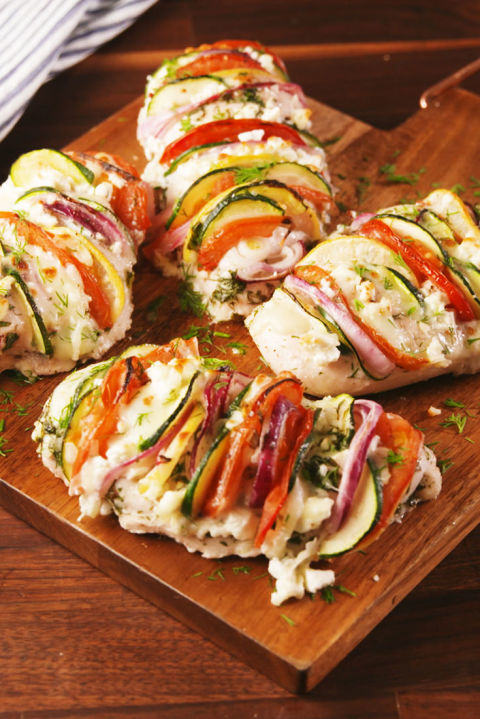
Primavera Stuffed Chicken
It's sooo pretty.
Get the recipe from Delish.
Taco Tomatoes
These are the prettiest low-carb tacos you'll ever see.
Get the recipe from Delish
One-Pan Balsamic Chicken And Asparagus
Easy and healthy? Count us in.
Get the recipe from Delish.
Spinach Artichoke Stuffed Peppers
Your favorite dip turned into a meal!
Get the recipe from Delish.
Cheesy Tex-Mex Cauli Rice
Instant weeknight fav.
Get the recipe from Delish.
BUY NOW: Le Creuset Cast-Iron 12" Skillet, $200; amazon.com.
Garlicky Greek Chicken
Garlic lovers, this chicken is for you.
Get the recipe from Delish.
Deep Dish Cauliflower Pizza
Carbs, see ya never!
Get the recipe from Delish.
Garlicky Lemon Mahi Mahi
Mahi Mahi was made for summer.
Get the recipe from Delish
BUY NOW: Le Creuset Cast-Iron 9" Skillet, $140; amazon.com.
Subscribe to:
Comments (Atom)